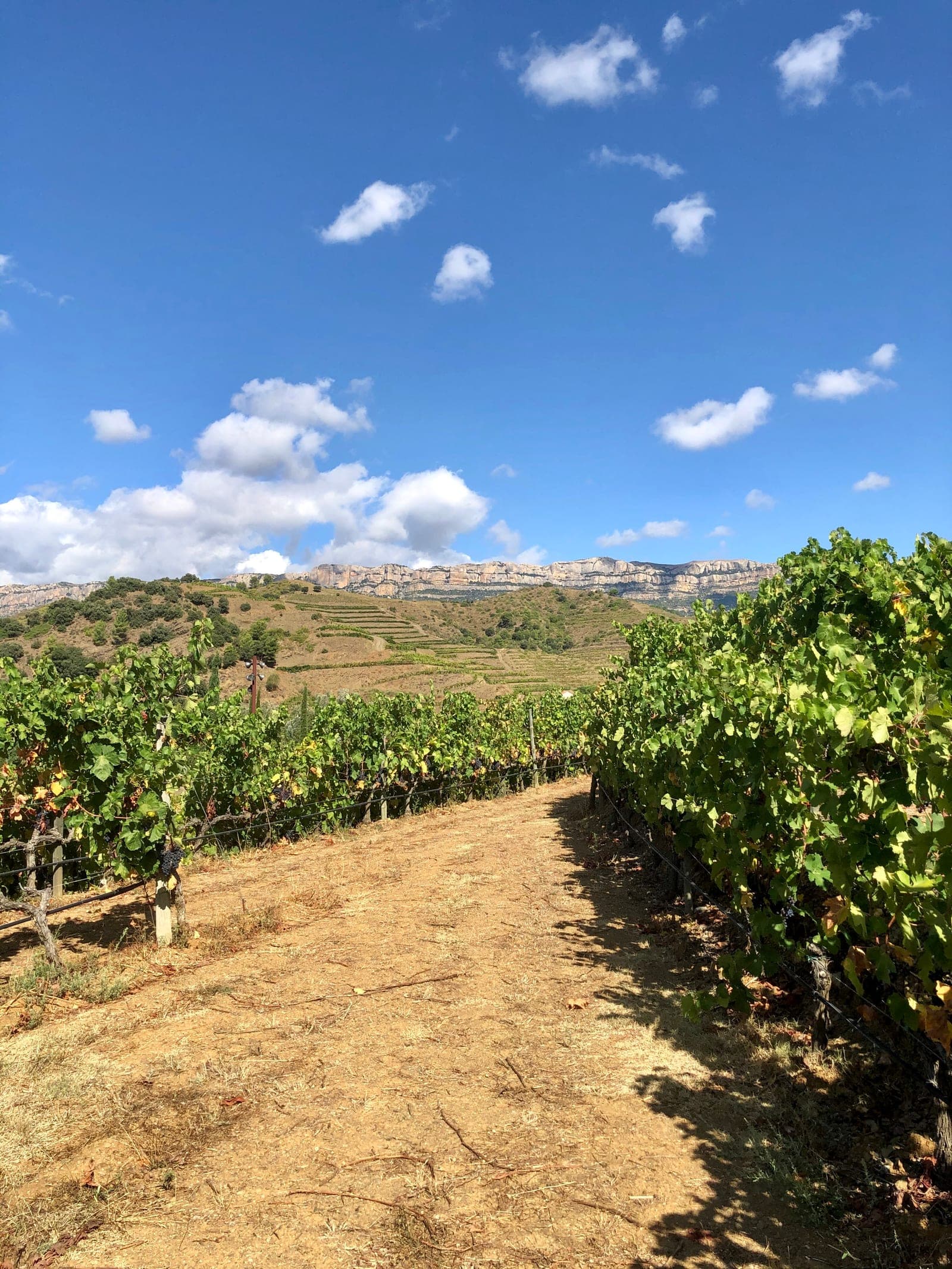
Wine and food in the Priorat
Cellars cut into terraced slate, forty minutes away. Priorat is one of only two wine regions in Spain with DOQ status — the other is Rioja. The eating is just as serious: our own favourite is Brots, a small chef-owned restaurant in Poboleda. Beyond it — Ca La Peirona in Vilaplana, family-run since 1999, for game and traditional Catalan cooking; La Nau in Alforja for an easy tapas lunch; Lo Refugi in Cornudella de Montsant, where the climbers and runners eat; and El Celler de l’Arbocet in Riudoms for the occasion that calls for it.
Book ahead; most bodegas are small family operations, not visitor centres.
What to do
The Priorat is forty minutes away and it is one of only two wine regions in Spain to hold the top qualified-origin tier; the other is Rioja. Neighbouring Montsant, which wraps around it, sits at the ordinary denomination level, and the two are often confused because the geography interleaves them. The distinction is not snobbery. It reflects the slate — llicorella, the black schist the vines are cut into — and the yields it forces down, which is why the bottles cost what they do. The history explains the place better than a tasting note does. Carthusian monks planted these hillsides from the twelfth century, working out of the monastery at Scala Dei — the same Escaladei whose ruins and shop are still there — and terraced the slopes to make it possible at all. That lasted until the 1830s, when the land was expropriated and the monks left. Then phylloxera arrived late in the century and finished the job: the vines died, the work vanished, and people emigrated in numbers the villages never recovered from. For most of the twentieth century the Priorat was simply a poor corner of Catalonia with good rock and no money. The turn came in the late 1970s and through the 1980s, when a small group of winemakers moved into Gratallops and rebuilt the idea from the ground up — estate bottling, savage yield reduction, and the argument that the slate itself was the point. They were right, and the region went from forgotten to internationally expensive inside a generation. That is why the villages look older than the wineries do. Most bodegas need booking ahead, because turning up unannounced at a small family cellar rarely works. It fits a half day: a cellar visit and a long lunch sit comfortably alongside a morning on the trails or an afternoon in the pool. Kai’s own pick is Mas Doix, in Poboleda, for the best views of the Montsant and a tasting room he describes as Nordic in style — an unexpected thing to find in a Catalan cellar, and the wines hold their end up. In Gratallops there is Clos Alkio, which is worth the detour for a reason particular to this house: it is a Finnish winery. It was founded in 2020 by a Finn, works about twenty-five hectares of mostly old vines organically, and grows the traditional Carinyena and Garnatxa alongside varieties that have no business being there. A Finnish family up the hill and a Finnish winemaker down it. For a lunch that is the point of the day rather than an interruption to it, Terra Dominicata. It is a five-star hotel with its own winery and a restaurant, built into the old farm of the Carthusian monks at Escaladei and sitting inside the Montsant natural park. Kai rates Escaladei generally, and its oil-and-wine shop is a good one. Buying is a different errand from tasting, and it happens in Falset. In his words it is “not the prettiest of these towns, but it is the capital of the Priorat wine region”, which is the useful way to think about it: go there to buy properly, go to the villages to look at things. Oil deserves its own paragraph, because the obvious answer is not the best one. The cooperativa in Cambrils is the easy option and a good one. But Alforja presses its own oil, and Kai’s view is that it is undervalued simply because it is not marketed as hard as the coastal one. In season you can walk down into the village while the pressing is happening and go in. That is a fifteen-minute errand from the house that most guests never find out about, and it is a better souvenir than anything bought at an airport. Autumn is the best of it, for the harvest. Cellars are at their most alive then and the booking window closes earlier, so plan further ahead than you would in spring.