Dragonfly
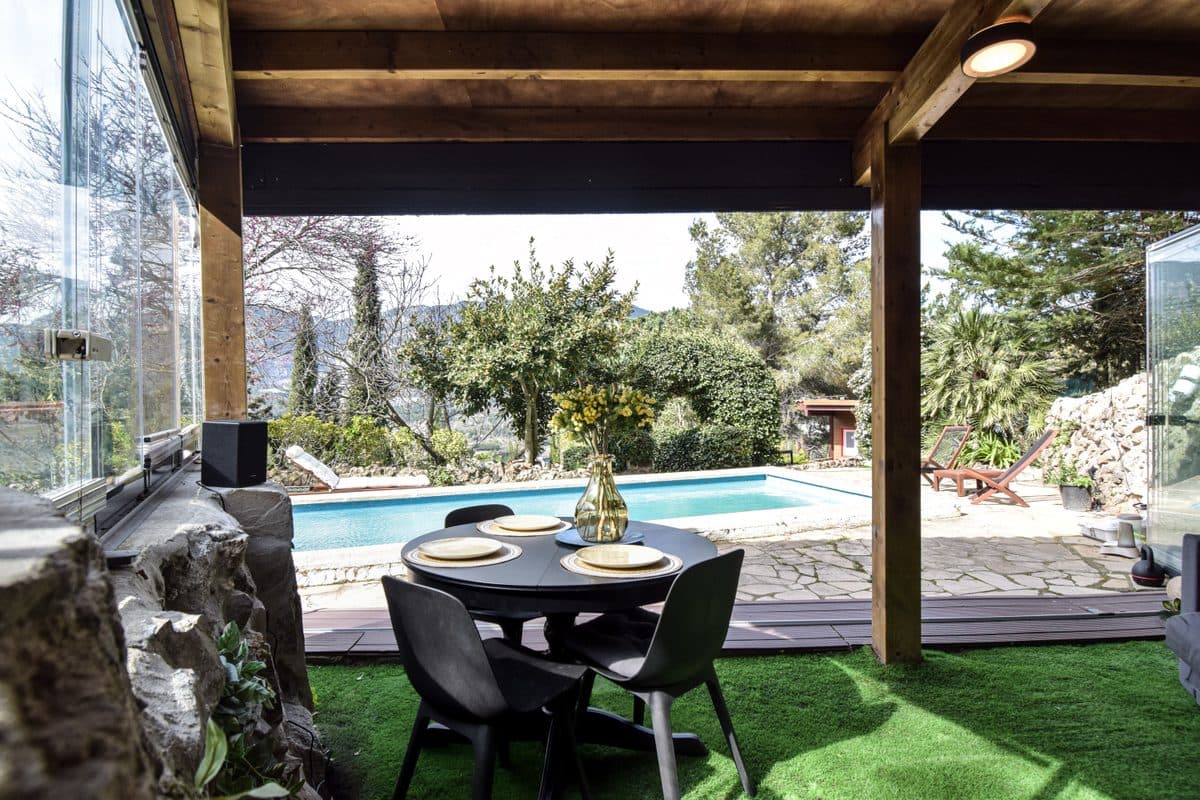
The glass garden room, beside the pool. A desk and wifi for a working day, a TV, sound system and Xbox once the day is done.
An outdoor living room with a pull-out sofa bed, if your group needs the extra space.
- Extra bed
- Pull-out sofa
- Workspace
- Desk + wifi
- Evening
- TV, sound, Xbox
More about the dragonfly
Dragonfly began as an outdoor gym and, in Kai’s telling, “got a bit out of hand”. It occupies the prime spot on the whole property, directly in front of the pool, and once that was obvious the plan stopped being a gym and started being something worth doing properly.
The gym did not survive the location, which is the honest version of what happened. A building put on the best spot on a property stops being somewhere you go to lift things and starts being somewhere you want to sit, and once that was clear the brief changed to match.
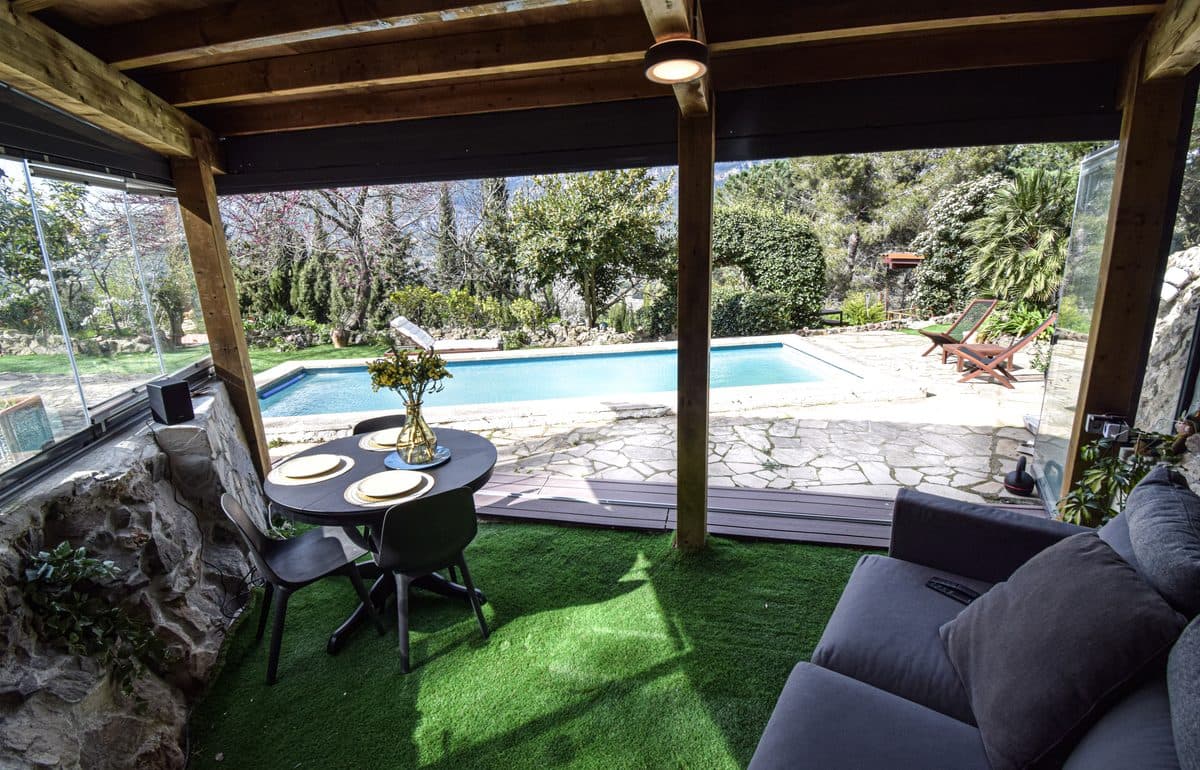
What it became is three rooms at once. First, the building you are wet in front of — somewhere to leave towels, a book and a laptop two steps from the water and still under a roof when the weather turns. It is an outside living room, glass on three sides, so you are among the trees and the water without being out in them. And it is an extra bedroom when a group needs one, on a pull-out sofa bed that is a real bed instead of a gesture.
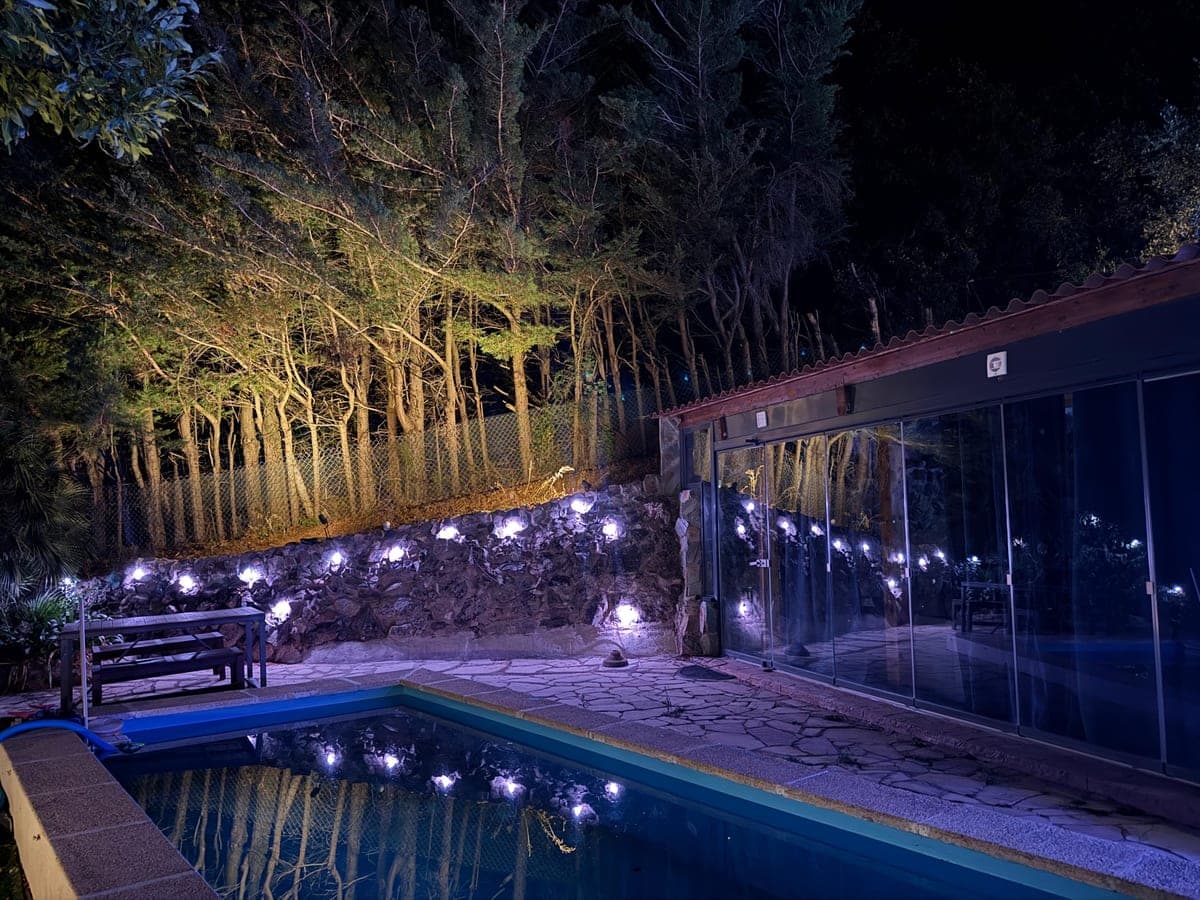
It is also the best office on the property, and Kai says it is where he works when he is here. The desk has wifi and the best views of anywhere in the grounds, which is a combination most houses cannot offer at all. Come evening the same room turns over to a TV, a sound system and an Xbox, and the glass that made it good to work in makes it good to sit in after dark, with the pool lit outside.
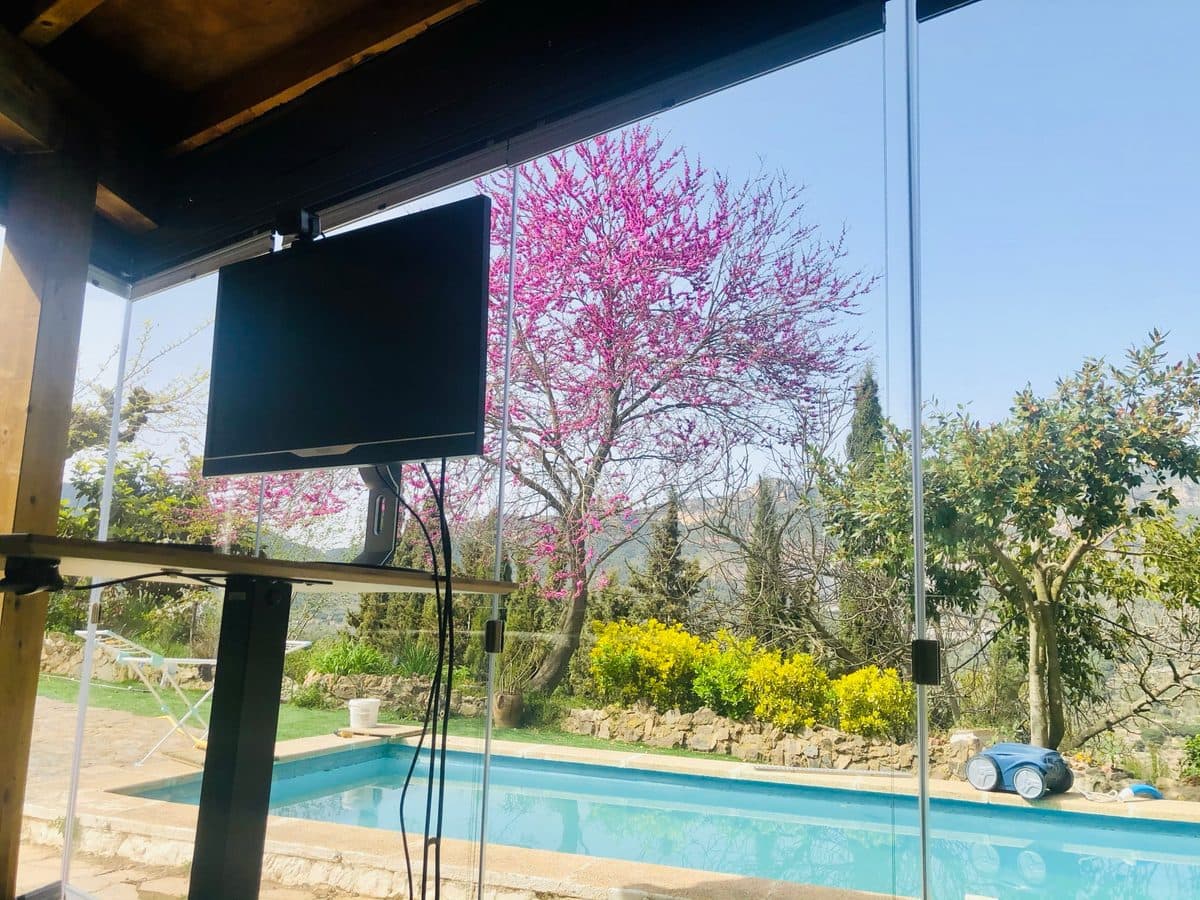
It opens onto its own covered terrace, so the room extends outdoors without you having to go anywhere: a table laid under cover, the pool a few steps off, the garden past it. In spring there is blossom in the frame from inside. After dark the glass reverses the effect entirely — lit from within, beside the lit water, it becomes the thing the rest of the garden looks at.
People tend to notice a stillness in it. Sitting in a glass room a few metres from water, with the garden going on around you and nothing much asking for your attention, does something that the photographs only half explain — it is the room guests come back to on their own. Katri picked the name, for the dragonflies that gather at the water.
As an office it is unusual, and that is the part worth taking seriously if you are the person whose leave is only partial. Most houses give a remote worker a corner of a bedroom or the end of a dining table. This gives a desk, a real connection and a wall of glass looking at the pool and the garden, and it is far enough from the main house that a call at ten in the morning does not depend on everybody else being quiet. It is also the reason a week here can be a working week for one person and a holiday for the rest of the group without either of them resenting it.
Two honest caveats, because the glass cuts both ways. The curtains are not good, so in summer the sun will wake you earlier than you would choose if you are sleeping in here — fine if you were getting up for a run, less fine if you were not. In winter it can get chilly; there is heating and there are big blankets, and in practice that settles it, but a glass room in January is a glass room in January.
The stone stairs between the terrace and Dragonfly have flower pots along the edge. In Kai’s words that is a signal, not a barrier: it stops an adult who reads it, and it will not stop a child.